
zostaw wiadomość
Jeśli jesteś zainteresowany naszymi produktami i chcesz poznać więcej szczegółów, zostaw wiadomość tutaj, odpowiemy tak szybko, jak to możliwe.


Wastewater pipes in chemical, petroleum, food processing, municipal sewage treatment and other industries are prone to medium freezing, increased viscosity and salt crystallization under low winter temperatures. These problems may lead to pipe blockage, pipe cracking and waste liquid leakage, resulting in production shutdown and environmental pollution. Traditional insulation can only slow down heat loss, while the electric heat tracing system, as an active pipe freeze protection solution, actively compensates for pipeline heat loss and solves winter operation challenges of wastewater pipelines. It has many outstanding advantages for wastewater pipe freeze protection and insulation:
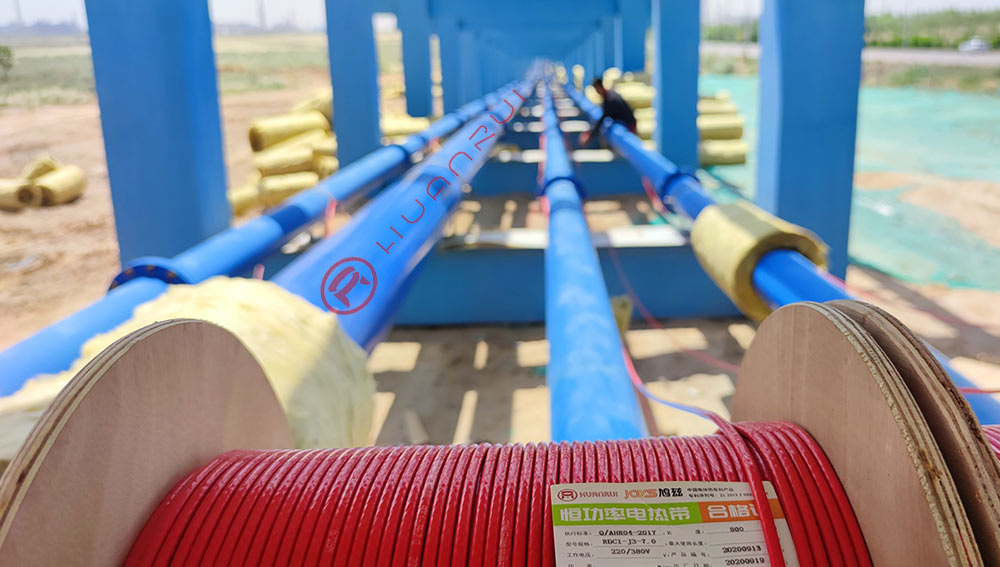
1. Active heat compensation to effectively prevent blockage and cracking of wastewater pipes
Different from ordinary passive insulation materials, the electric heat tracing system actively supplies heat to wastewater pipelines to offset heat loss caused by low temperatures and keep the medium temperature above freezing point to avoid sewage and waste liquid freezing.
Heat tracing cables can be laid on pipes, valves, flanges and other special-shaped fittings to eliminate local low-temperature dead zones. It fundamentally prevents ice blockage and avoids pipe cracking caused by volume expansion of frozen medium, reducing risks of pipeline damage and hazardous wastewater leakage and ensuring continuous operation of the wastewater system.
2. Maintain fluidity of waste liquid and reduce load of wastewater conveying equipment
Many industrial wastewater media include oily sludge and high-viscosity chemical waste liquid. Their viscosity rises sharply in low-temperature conditions, increasing conveying resistance, overloading wastewater pumps and raising energy consumption.
With temperature control components, electric heat tracing stabilizes the medium within a suitable temperature range to maintain good fluidity of waste liquid, ensure smooth discharge, reduce pump overload failures and improve wastewater discharge efficiency.
3. Inhibit salt crystallization and wall deposition to reduce scaling and blockage
Industrial wastewater often contains soluble inorganic salts. Temperature drop reduces solubility of solutes, causing salts to precipitate and deposit on the inner pipe wall. Long-term accumulation reduces the effective pipe diameter and leads to blockage that requires shutdown for cleaning.
Electric heat tracing insulation maintains stable medium temperature, reduces salt precipitation and impurity deposition, lowers the chance of scaling and blockage, and cuts down pipeline maintenance and cleaning frequency.
4. Wide adaptability to working conditions and flexible installation for wastewater pipes
Wastewater pipelines can be overhead, laid in trenches or semi-buried. Self-regulating heating cables can be cut on-site and bent to fit pipe surfaces. Installation around valves, tees, flanges and other complex fittings is convenient.
This system does not require steam pipelines and condensate recovery systems needed for steam tracing. It is not limited by pipe length and route, making it easy to retrofit old wastewater pipelines.
5. Precise temperature control and energy-saving operation
Equipped with temperature controllers, the electric heat tracing system automatically turns heating on and off according to ambient and medium temperatures to supply heat on demand and avoid continuous unnecessary heating, consuming less energy than traditional tracing solutions.
Self-regulating heating cables feature automatic power adjustment: power output drops when temperature rises, with no risk of local overheating for higher safety.
6. Explosion-proof options available to meet safety standards for wastewater pipelines in chemical plants
Wastewater areas in chemical and petrochemical plants are mostly hazardous explosive zones. Explosion-proof electric heat tracing products complying with domestic standards and ATEX specifications can operate reliably in hazardous industrial sites.
7. Support intelligent remote monitoring and simple later maintenance
The complete electric heat tracing system can connect to the plant’s DCS/PLC control system to realize real-time temperature monitoring and fault early warning. Operators can check operating status remotely.
Once installed, the system requires little maintenance and no constant on-site inspection, greatly reducing winter freeze protection maintenance costs for wastewater pipelines.
Conclusion
To solve winter pain points of wastewater pipes including ice blockage, cracking, medium crystallization and poor fluidity, electric heat tracing systems feature active heat compensation, precise temperature control, flexible installation, explosion-proof safety and intelligent monitoring. They ensure stable transportation of sewage and industrial waste liquid and avoid environmental risks caused by leakage. It is a mature and reliable freeze protection and insulation solution for wastewater pipelines in municipal, chemical and food industries.
 Obsługiwana sieć IPv6





zostaw wiadomość
Zeskanuj do Wechata :
Zeskanuj do WhatsApp :